 Understand your Thailand options. Book a consultation with Tarn →
Understand your Thailand options. Book a consultation with Tarn →

There is a moment every foreigner experiences in Thailand. You're sitting at a street food stall, feeling confident. You've been here a few weeks. You've had pad kra pao. You've survived som tum. You think you understand spicy now. So when the owner asks how spicy you want it, you say the words. "Very spicy." The owner pauses. Looks at you. Tilts their head slightly. Then comes the question that should make your blood run cold: "Are you sure?" You say yes. You are not sure. You will never be sure again


Talk with our Thailand Specialists Numfhon, Tarn or Eric.
★★★★★ 5.0 on Google · Best Thailand visa agency
It's early morning in Bangkok, we'll reply this morning at 9am.
Bangkok · Pattaya · Chiang Mai · Phuket · Koh Samui
100% money-back guarantee
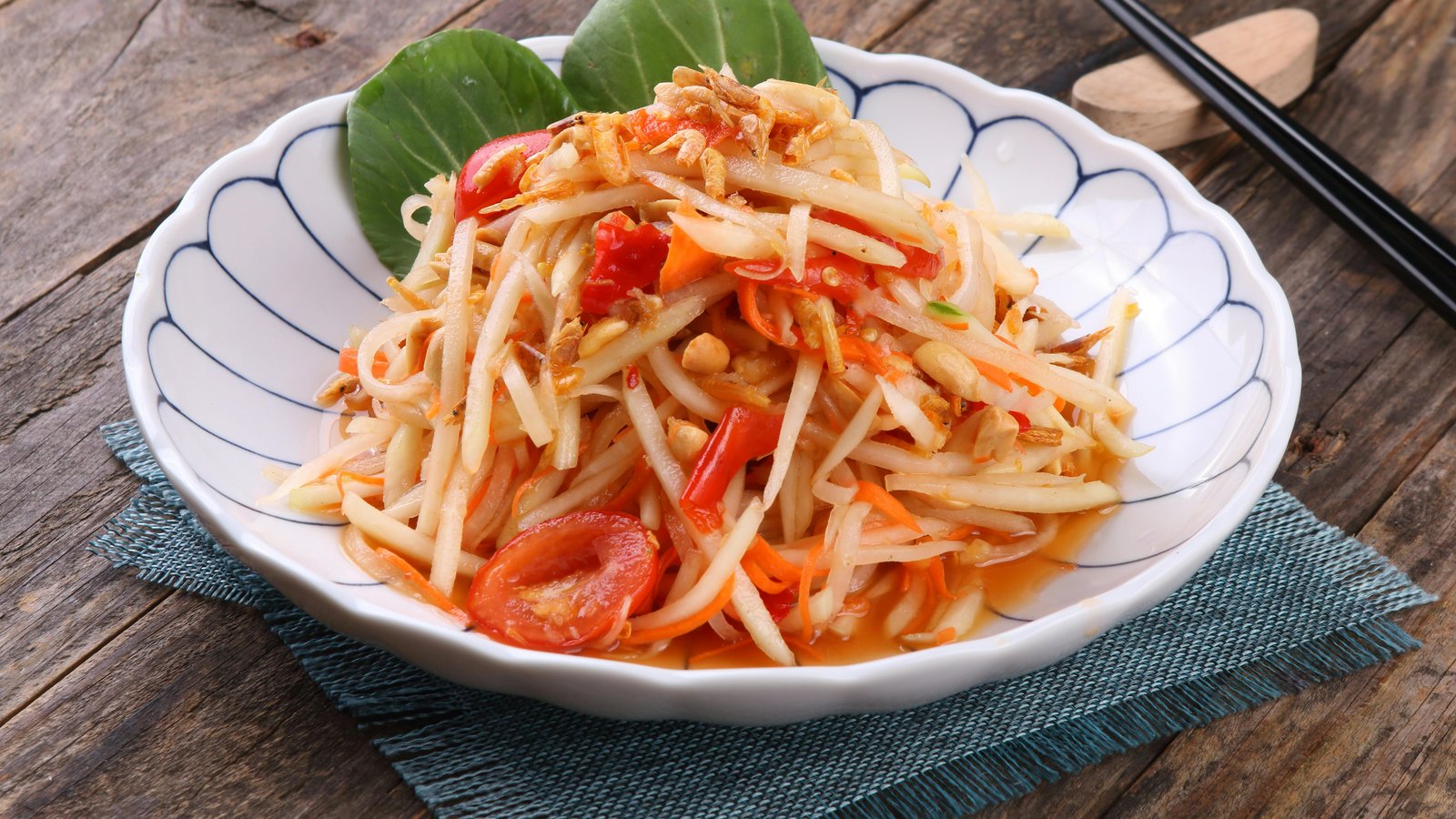
Farang Spicy vs Thai Spicy — A Scale That Will Humble You
You said very spicy. The owner smiled. That smile should have been a warning.
There is a moment every foreigner experiences in Thailand. You're sitting at a street food stall, feeling confident. You've been here a few weeks. You've had pad kra pao. You've survived Som Tum. You think you understand spicy now.
So when the owner asks how spicy you want it, you say the words.
"Very spicy."
The owner pauses. Looks at you. Tilts their head slightly. Then comes the question that should make your blood run cold: "Are you sure?"
You say yes. You are not sure. You will never be sure again.
THE PROBLEM WITH THE WORD "SPICY"
Here's what nobody tells you before you visit Thailand: the word "spicy" means completely different things depending on who you are.
When a foreigner says spicy, they mean exciting. A little kick. Maybe some warmth in the chest. Something to post about with a sweating emoji.
When a Thai person says spicy, they mean business. They mean bird's eye chilies — prik kee noo — the small ones that look harmless and taste like a personal vendetta. They mean chili paste, fresh chili, dried chili, and sometimes chili on top of the chili, just to be safe.
This is not a cultural misunderstanding. This is a full civilizational gap.
THE REAL SPICY SCALE IN THAILAND
Level 1 — Tourist Spicy: What the restaurant gives you when they look at your face and make a judgment call. Mild warmth. Totally manageable. You feel proud of yourself. You tell people back home you ate spicy Thai food.
Level 2 — Adjusted Spicy: When you come back a second time and ask for a little more spicy. You feel a tingle. Your lips go slightly numb. You drink more water than usual. Still fine.
Level 3 — Foreigner Maximum: You've pushed your limits. You're sweating. You're breathing through your mouth. You take a photo and caption it 🔥🔥🔥. Thai people at the next table are eating the same dish and having a calm conversation about their weekend plans.
Level 4 — Local Standard: This is what Thai people consider a normal meal. Not special. Not impressive. Just Tuesday. You will question every decision that led you to this moment.
Level 5 — Thai Grandma Spicy: There is a woman somewhere in Isaan right now eating something that would hospitalize you. She is 72 years old. She is completely fine. She thinks the food is a little bland today.
WHY ARE THAI PEOPLE BUILT DIFFERENT?
This is not magic. It is not genetics. It is a lifetime of training that begins before most Thai children can even form sentences.
Thai babies grow up in kitchens that smell of galangal and chili. Their first experiences of flavour include things that would make a grown foreigner call for help. By the time a Thai person is ten years old, they have built a capsaicin tolerance that most foreigners will never achieve in their lifetime.
Capsaicin — the compound that makes chili hot — works by binding to pain receptors in your mouth. With repeated exposure, those receptors become less sensitive. Thai people have been doing this exposure therapy since childhood, completely by accident, simply by eating food.
Meanwhile, the average tourist has spent their whole life eating food that was designed specifically to not cause pain. You cannot close a thirty-year gap in one holiday.
THE DISHES THAT CATCH FOREIGNERS OFF GUARD
Some Thai dishes are obvious. Tom yum looks spicy. Som tum looks spicy. You are prepared.
Then there are the traps.
Nam prik — a chili dipping paste that looks like a condiment and is actually a weapon. Foreigners dip everything in it because it looks friendly.
Larb — a minced meat salad from the north that is absolutely packed with dried chili flakes. It looks dry and crumbly and harmless. It is not harmless.
Pad prik king — a dry curry stir fry that has no liquid to warn you, no sauce to dilute the heat. Just meat, green beans, and an enormous quantity of chili paste cooked until concentrated.
Boat noodles — the broth looks dark and rich and delicious. It is dark and rich and delicious and also contains enough chili to make your eyes water before the spoon reaches your mouth.
WHAT THAI RESTAURANT OWNERS ARE ACTUALLY THINKING
I have asked. The answer is always some version of the same thing.
"When a farang says very spicy, I have to guess. If I make it real Thai spicy and they can't eat it, they are unhappy and I feel bad. So I make medium spicy and tell them it's spicy. Usually this is better for everyone."
This is kindness. This is experience. The "are you sure?" is not a challenge. It is an act of mercy. A last exit before you commit to something you cannot undo.
CAN YOU TRAIN YOUR WAY UP?
Yes. Absolutely yes. And Thailand is the perfect place to do it.
The strategy is simple: eat Thai food every day and let the heat creep upward naturally. Start with dishes that are flavourful but not aggressive. Pad thai. Khao man gai. Massaman curry. Build your baseline.
Then start nudging. Ask for a little more spicy each visit. Eat Som Tum and actually chew the chilies instead of moving them aside. Order dishes from the Isaan region, where the heat is serious and the flavors are extraordinary.
Within a few months of regular eating, you will notice the change. Things that used to burn now just warm. Things that used to make you sweat now make you happy.
THE HIGHEST COMPLIMENT
There is something that happens occasionally, if you've been living in Thailand long enough and eating the right things.
You order your food. You say spicy. The owner looks at you — really looks at you — and instead of asking "are you sure?" they just nod and turn back to the wok.
That nod means something. It means you've crossed a line. It means they believe you now. It means you've earned your seat at the table.
The next time someone asks "are you sure?" — think carefully before you answer. Then say yes anyway. It's worth it. 🌶️
A 1-hour video call with a Thailand visa expert. A written plan in your inbox within 24 hours. And a full year of email and chat support to keep you on track.