 Understand your Thailand options. Book a consultation with Tarn →
Understand your Thailand options. Book a consultation with Tarn →

Complete DTV visa guide: What it is, the 4 requirements, and which category fits you (Remote Worker, Freelancer, Soft Power, Dependent). Learn how to apply, why Muay Thai is easiest, and how Thai Kru helps you get your 5-year Thailand visa approved.


Talk with our Thailand Specialists Numfhon, Tarn or Eric.
★★★★★ 5.0 on Google · Best Thailand visa agency
It's early morning in Bangkok, we'll reply this morning at 9am.
Bangkok · Pattaya · Chiang Mai · Phuket · Koh Samui
100% money-back guarantee
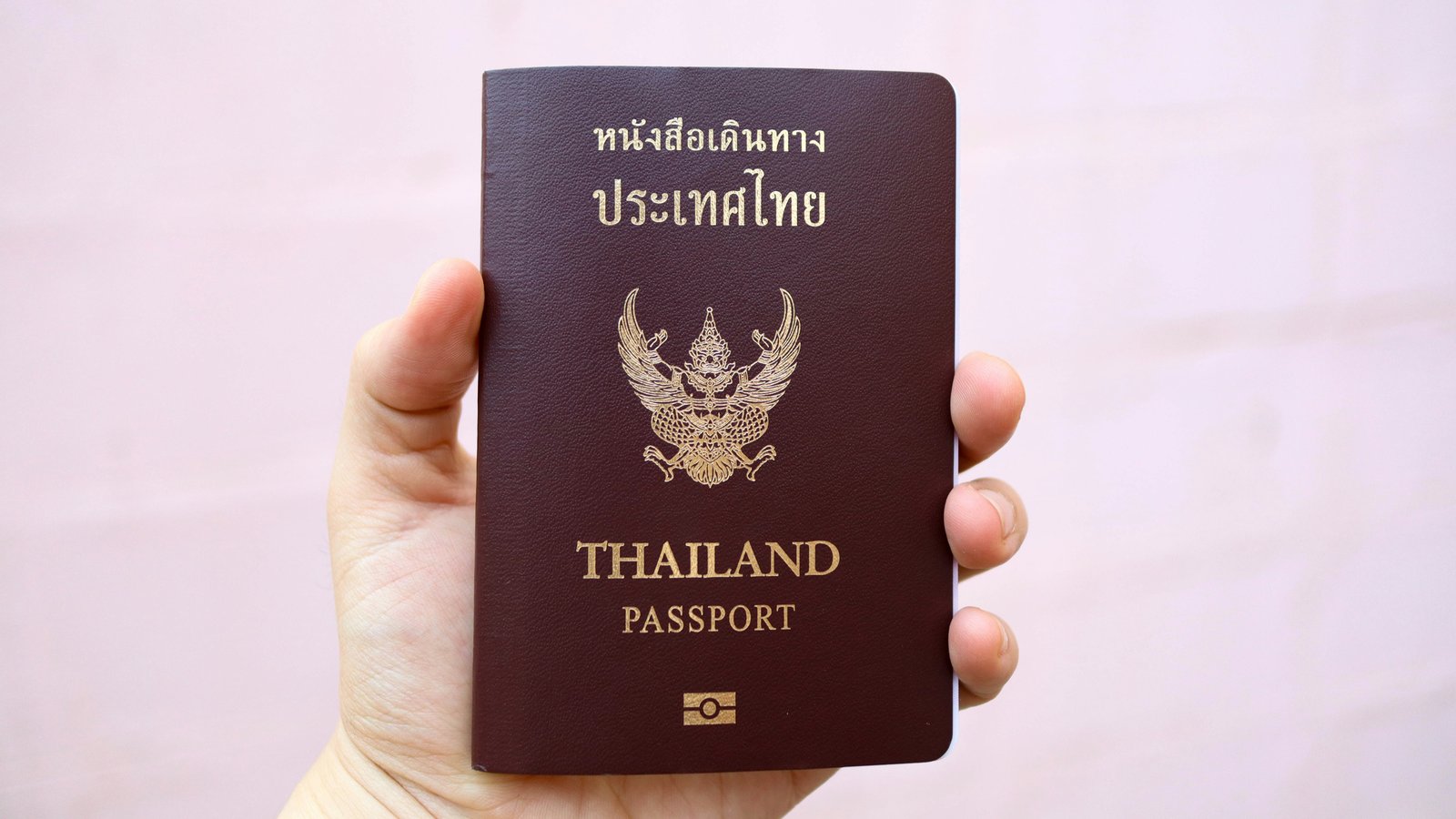
So, you've heard whispers about Thailand's DTV visa. Maybe from that one friend who's been "working from Chiang Mai" for the past year. Maybe from a Facebook group. Maybe from a suspiciously tan digital nomad on Instagram.
And now you're wondering: Is this real? Can I actually live in Thailand for 5 years without the usual visa headaches?
Short answer: Yes.
Long answer: Yes, but let's make sure you actually qualify first.
Welcome to the complete (and refreshingly honest) guide to Thailand's Destination Thailand Visa—the DTV. No fluff, no visa agent sales pitch, just the facts you need to know.
Think of the DTV as Thailand's way of saying: "Hey, we know you want to work remotely from a beach somewhere. We'd prefer that beach be in Thailand."
Here's what you get:
What it costs:
Not bad for half a decade of Thai sunsets, right?
Let's cut through the bureaucracy. To apply for a DTV visa, you need exactly 4 baseline things:
If your passport expires in 5 months, stop reading and go renew it first. We'll wait.
Yes, it needs to be recent. No, that photo from 2019 where you had different hair doesn't count. Yes, they actually check.
This is the big one. Your bank account needs to show at least 500,000 THB (or equivalent in USD, EUR, etc.) for the last 3-6 months.
Important notes:
Standard paperwork. Download it from the Thai embassy website where you're applying. Fill it out. Don't overthink it.
BUT WAIT. Those are just the baseline requirements. You also need to prove you fit into one of the 4 DTV categories. And that's where it gets interesting...
Thailand didn't just create one massive visa for everyone. They created 4 pathways, depending on what you actually do. Let's break them down:
Who this is for: Digital nomads with real jobs. People who work for companies that are NOT in Thailand.
What you need (beyond the 4 basics):
Examples of people who qualify:
Why this category: You have a stable job, consistent income, and documentation to prove it. This is the "I'm employed, just not here" category.
Reality check: If you freelance for 5 different clients and your "employer" is basically yourself, you probably fit better in Category 2.
Who this is for: Self-employed professionals. The "I am my own boss" crowd.
What you need (beyond the 4 basics):
Examples of people who qualify:
Why this category: You work for yourself. You have clients (plural). You can prove you make money doing this.
Reality check: This category requires MORE documentation than Remote Workers because you need to prove your freelance work is legit and sustainable. If you've been freelancing for 6 months and have 2 clients, embassies might raise an eyebrow. If you've been doing it for years with a solid portfolio, you're golden.
Who this is for: People who want the easiest possible path to a DTV and are willing to enroll in a Thai cultural activity to get it.
What you need (beyond the 4 basics): Proof of enrollment in ONE of these activities:
Option A: Muay Thai Training 🥊
Option B: Thai Cooking Course 🍳
Option C: Medical Treatment 🏥
Option D: Wellness/Spa Programs 🧘
Option E: Seminars/Workshops 📚
Option F: Music/Arts Activities 🎨
Why this category: It's the cheat code. You don't need a job. You don't need clients. You just need to enroll in something Thai-culture-related, show your 500k THB, and boom—5 year visa.
Reality check: Most people choose Muay Thai because:
Is this gaming the system? Kind of. Does Thailand care? Not really—they created this category specifically to attract long-term visitors.
Who this is for: Your spouse and kids, if you already have a DTV.
What you need:
Why this category: So your family can join you in Thailand without everyone needing separate work contracts or Muay Thai enrollments.
Reality check: You can't just apply as a dependent first—someone needs to have the main DTV already.
Let's make this simple:
Choose Remote Worker if: ✅ You have a full-time job with a company outside Thailand
✅ Your employer can provide documentation
✅ You want the most "legitimate" looking visa
Choose Freelancer if: ✅ You work for yourself
✅ You have multiple clients and a solid portfolio
✅ You can prove consistent income
✅ You're okay gathering more documentation
Choose Soft Power if: ✅ You want the easiest route
✅ You don't work remotely (or don't want to prove it)
✅ You're fine enrolling in Muay Thai/cooking/etc.
✅ You just want a long-term visa without the hassle
Choose Dependent if: ✅ Your spouse already has a DTV
✅ You're under 20 and your parent has a DTV
Remote Worker:
Freelancer:
Soft Power:
Dependent:
Q: Do I REALLY need 500,000 THB? Can I just deposit it right before applying?
A: Technically you need to SHOW it's been there for 3-6 months. Some people deposit it, wait a few months, then apply. Embassies vary on how strictly they check this. Do with that information what you will.
Q: Can I work for Thai clients on a DTV?
A: Officially? No. The income should be from outside Thailand. In practice? It's a gray area. Many freelancers do it anyway. We're just telling you the official rule.
Q: If I choose Soft Power (Muay Thai), do I actually have to train?
A: Technically, yes. Realistically? Once you have the visa, no one's checking if you showed up to class. But you DO need legitimate enrollment to get approved.
Q: Which embassy is easiest to apply through?
A: Popular choices: Vientiane (Laos), Taipei (Taiwan), Jakarta (Indonesia). Each has slightly different requirements. Do your research on forums.
Q: Can I switch categories later?
A: No. Once you apply under a category, that's your DTV. If you want to change, you'd need to let it expire and reapply (in 5 years).
The DTV visa is legitimately one of the best long-term visa options Thailand has ever offered.
The only real barriers:
If you can clear those two hurdles, you're in.
Our take?
If you're a digital nomad who's been doing visa runs every 60-90 days, this changes everything.
If you're working remotely and tired of the "where do I get my next visa" stress, this is your answer.
If you just want to live in Thailand long-term and are willing to enroll in a Muay Thai course to make it happen, welcome to the Soft Power club.
Here's your action plan:
Step 1: Check your bank account. Do you have 500k THB (or $14k USD equivalent)?
Step 2: Pick your category
Step 3: Gather your documents
Step 4: Choose which Thai embassy to apply through
Step 5: Apply and wait (usually 3-7 days for approval)
Step 6: Fly to Thailand with your shiny new 5-year visa
The DTV is new (launched in 2024), and embassy requirements are still evolving. Some embassies are strict, some are relaxed. Some want 3 months of bank statements, others want 6. Some accept online applications, others require in-person.
That's where we come in.
👉 Contact Thai Kru Visa Services
We've helped hundreds of applicants successfully get their DTV visas. We know:
We can help with: ✅ Document preparation and review
✅ Embassy selection advice
✅ Muay Thai/cooking school enrollment (if going Soft Power route)
✅ Application submission guidance
✅ Translation services if needed
Whether you're a remote worker, freelancer, or just someone who wants to live in Thailand without the visa stress—we'll make sure your DTV application is bulletproof.
The DTV visa is your chance to live in Thailand for 5 years without the annual immigration office renewals, without the 90-day visa runs, without the stress.
The question isn't whether you should apply.
The question is: Which category fits you best?
Figure that out, and Thailand is yours for the next half-decade.
Not a bad deal, right?
Ready to start your DTV journey? Contact Thai Kru today for expert guidance, document review, and application support. We'll get you from "I want a DTV" to "I have a DTV" as smoothly as possible.
Because life's too short for visa stress. And Thailand's too beautiful to only visit for 30 days at a time.
A 1-hour video call with a Thailand visa expert. A written plan in your inbox within 24 hours. And a full year of email and chat support to keep you on track.